
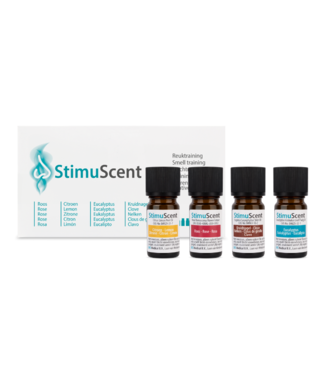
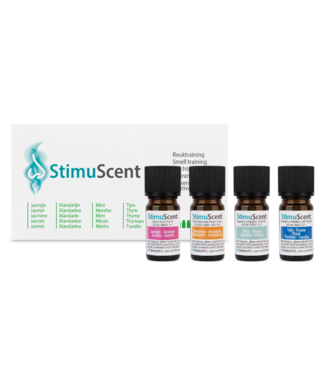
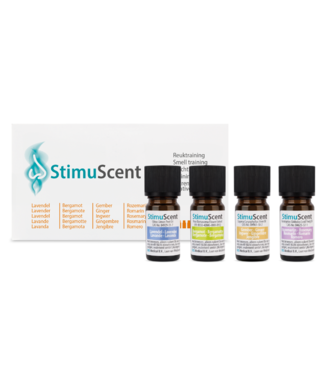
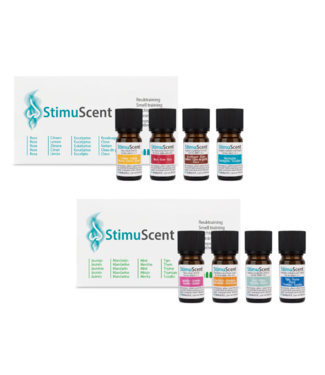
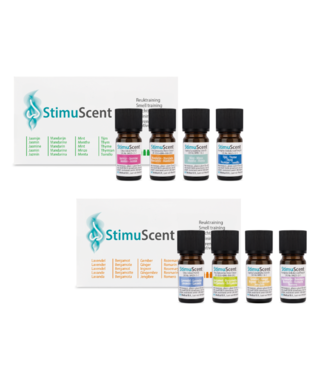
In cases of long-term loss of smell, olfactory training can help stimulate the sense of smell. On this page, you will find aids for olfactory training and read more about loss of smell, the different forms, and the possible causes.
What is loss of smell?
Loss of smell means that you can perceive smells less well or not at all. Because smell and taste work closely together, many people also find that food and drinks have less flavor.
There are different forms of olfactory loss:
- Hyposmia : a reduced sense of smell, causing odors to be perceived less strongly.
- Anosmia : complete loss of smell. You can no longer smell any odors at all.
- Parosmia : odors are perceived in a distorted way. Familiar odors, for example, may smell unpleasant or different.
- Phantomsmia : you smell odors that are not actually there.
The cause of these olfactory disorders can vary. Therefore, it is important to first determine the cause of the loss of smell.
What are the causes of loss of smell?
Loss of smell can have various causes, including:
- cold
- COVID-19
- hay fever or other allergies
- chronic sinusitis
- nasal polyps
- a deviated nasal septum
- old age
- certain neurological disorders
The cause often determines whether the sense of smell recovers on its own or whether further treatment is necessary.
Can your sense of smell be restored?
Whether the sense of smell returns depends on the cause of the loss of smell.
With a cold or COVID-19, the sense of smell recovers in many people within a few weeks or months. If the loss of smell persists longer, a doctor may recommend olfactory training. If the loss of smell is the result of another condition, a different treatment may be necessary.
How can olfactory training help with loss of smell?
For some forms of olfactory loss, olfactory training can help stimulate the sense of smell. Olfactory training is often used when olfactory loss persists for a longer period, for example after a cold or COVID-19.
During olfactory training, you practice daily with various recognizable scents. The goal of this is to train the sense of smell. Scientific research shows that olfactory training can contribute to the recovery of the sense of smell in a subset of people with long-term olfactory loss.
What tools are available for smell training?
For smell training, you use scent sets with various recognizable scents. Within our range, you will find various tools to start smell training immediately. The scent sets differ in, among other things, the number of scents and the way the training is structured.
You can find all fragrance sets at the top of this page or on the page about g. Click on a fragrance set for product information.
View all tools for smell training above. Would you like to know more about smell training and how to get started? Then read our comprehensive information page on smell training .
When should you see the doctor?
Contact your GP when:
- you suddenly smell less or nothing at all without a clear cause;
- the loss of smell persists longer;
- you suffer from a blocked nose, pain, or nosebleeds in addition to loss of smell;
- the loss of smell keeps recurring;
- you experience other symptoms in addition to loss of smell, such as balance problems or neurological symptoms.
Frequently asked questions about loss of smell
What are the most common causes of loss of smell?
The most common causes are the common cold, COVID-19, hay fever, chronic sinusitis, nasal polyps, and a deviated septum. Old age and some neurological conditions can also affect the sense of smell.
Can loss of smell go away on its own?
Yes. With a cold or COVID-19, the sense of smell recovers on its own in many people. How long this takes varies from person to person.
What is the difference between loss of smell and anosmia?
Anosmia is the medical term for complete loss of smell. When you can still smell something, but not as well as normal, it is called hyposmia.
Does smell training help?
Olfactory training is a widely used method for long-term loss of smell. Scientific research shows that a portion of people experience an improvement in their sense of smell as a result.
How long does smell training take?
Scent training requires time and regularity. It is often recommended to practice daily for several months.
Is loss of smell the same as loss of taste?
No. Smell and taste are two different senses. Because they work closely together, food often seems to have less flavor when your sense of smell is impaired.
More information?
In our blog section on olfactory disorders, you will find several in-depth blogs on this subject.